3933 24th St, San Francisco, CA, 94114
Bonded & Insured
San Francisco, CA

San Francisco Roofing Contractor for Flat Roofs, Repairs & Reroofs Since 2005

San Francisco roofs don't fail the way roofs fail anywhere else. Most of them are flat or low-slope, tucked behind decorative parapets on century-old Victorians, Edwardians and stucco row houses. Winter atmospheric rivers push rain sideways into parapet caps and flashing laps. Fog keeps west-side roofs damp for weeks at a time, and salt air eats through metal. So when a leak finally shows up in a top-floor bedroom or halfway down a light well, finding where it actually starts takes experience. San Francisco Quality Roofing Company has handled exactly these roofs since 2005, with clear estimates, clean job sites and schedules we stick to.

We know how this city's roofs are built because we've been on top of them for two decades. We've seen moss-covered parapets and corroded scuppers in the Outer Sunset. We've worked tar-and-gravel overlays three layers deep in Noe Valley, and cracked cap sheets baking in the sun on Potrero Hill. We plan around steep streets, shared party walls, street-space permits and tenants who still need to get to work. Every project is built around your goals, budget and timeline, and we keep you updated from the first consultation to the final walkthrough.

  • Serving San Francisco since 2005
  • Bonded for your protection
  • Fully insured
  • Free written estimates
Free Estimate

Request Your Free Estimate

No obligation. Fast, honest quotes.

Prefer to talk? Call (415) 634-3044 — your details are never shared.

Credentials & Certifications BondedInsuredFinancing Available
What We Do

Roofing Services Built for San Francisco Buildings

Every service we offer is shaped by how San Francisco roofs are actually built: flat roofs behind parapets, attached row houses, steep hillside lots and multi-unit buildings. We start with an honest diagnosis, give you a clear written estimate and recommend what your roof really needs, whether that's a targeted repair or a full replacement.

★ Specialty

Roof Repair

We track down the actual source of a leak, which in a San Francisco building is often nowhere near the stain, and fix it for good. That covers parapet caps, flashing, membrane seams, scuppers, drains and penetrations.

We trace water paths from inside and out, inspect parapet terminations and light-well drains, and water-test when it makes sense. Repairs use materials compatible with your existing roof so a patch doesn't create a new weak point.

Most of our repairs are on Victorian and Edwardian flat roofs in the Mission, Haight-Ashbury and Noe Valley, and on stucco row homes in the Outer Sunset, where parapet caps and counterflashing are the usual culprits.

Best for: Owners with a recurring leak, storm damage, a failed parapet cap or a roof that's still mostly sound and worth extending rather than replacing.

Explore
★ Specialty

Roof Replacement

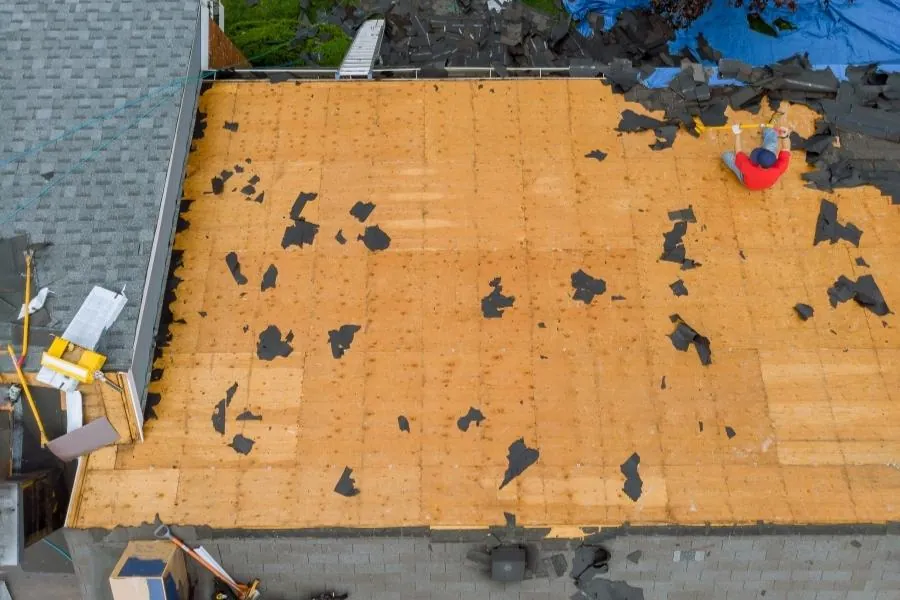
We tear off worn-out or layered roofs down to the deck, repair rotted sheathing and install a new code-compliant system, then rebuild the parapets, flashing and drainage details that make or break a flat roof.

For low-slope roofs we use modified bitumen, TPO or PVC, with torch-free options for attached wood buildings. We add tapered insulation for drainage and meet Title 24 cool-roof requirements. We also coordinate DBI permits, inspections and street-space permits.

Replacement often turns up multiple old layers, old-growth redwood sheathing, asbestos-containing mastics or dry rot under parapets. We plan for those possibilities up front on century-old buildings in Bernal Heights, Pacific Heights and the Inner Richmond.

Best for: Roofs past 20 years, roofs with two existing layers, waterlogged or soft decks, or buildings with leaks in many places that keep coming back.

Explore

Roof Installation

We install new roofing on additions, penthouses, new construction and newly framed roof decks, with the waterproofing details designed in from the start.

We match the system to roof slope, exposure and use: membranes for low-slope areas, and composition shingle or tile on pitched sections. Edge, parapet and penetration details are planned before the first sheet goes down.

San Francisco additions often tie into neighbors' party walls and existing parapets. We pay close attention to those junctions and to solar-ready layouts, which owners in West Portal and Glen Park increasingly ask for.

Best for: Homeowners and builders adding living space, penthouses, roof decks or new structures that need a properly detailed roof from day one.

Explore

Roof Inspection

We do a thorough, photo-documented assessment of your roof's condition, drainage, parapets, flashing and penetrations, with a clear report on what needs attention now and what can wait.

We walk the roof, check drains and scuppers, probe for soft decking, look at the attic or top-floor ceilings when possible, and photograph every finding so you can see what we saw.

With San Francisco's fast-moving real estate market, buyers and sellers often need roof inspections on tight timelines. Busy professionals and out-of-town owners value photos they can review without climbing onto a parapet roof.

Best for: Home buyers and sellers, landlords planning budgets, HOAs and TICs, and anyone who hasn't had their roof checked in two or more years.

Explore

Roof Maintenance

We do scheduled upkeep that heads off leaks before the rainy season: clearing drains, resealing penetrations, treating moss and catching small defects while they're still cheap to fix.

A typical visit includes clearing scuppers and downspouts, checking parapet caps and seams, resealing flashing, removing debris and moss, and touching up coatings, with photos of anything we find.

Fall maintenance before the atmospheric-river season makes the most sense here. Fog-belt homes in the Outer Sunset and Inner Richmond also benefit from moss and corrosion checks.

Best for: Flat-roof owners, landlords, multi-unit buildings and anyone who wants to stretch the life of a roof that's in decent shape.

Explore

Commercial Roofing

We repair, maintain and replace roofs on apartment buildings, mixed-use properties and small commercial buildings, scheduled to keep disruption to tenants and businesses as low as possible.

We install and repair TPO, PVC, modified bitumen and coating systems, detail rooftop HVAC curbs, and phase the work so units stay watertight. We document everything for owners, managers and insurers.

Many of our commercial jobs are 3–6 unit flat-roof buildings and mixed-use storefronts in the Mission District, Excelsior and Bayview-Hunters Point, where tenant coordination and street-space logistics matter as much as the roof itself.

Best for: Landlords, property managers, HOAs and business owners responsible for flat-roof apartment, retail or mixed-use buildings.

Explore

Emergency Roofing

We respond fast when a storm or damage lets water in, with tarping, temporary sealing and damage control to protect your interior until a permanent repair can be made.

We secure the leak area, tarp or temporarily seal the opening, clear blocked drains causing overflow, and photograph the damage for your insurance claim and records.

Atmospheric-river storms bring a wave of leak calls all at once, often from steep, hard-to-reach roofs on hillside streets in Bernal Heights, Potrero Hill and Glen Park.

Best for: Active leaks during storms, wind-lifted membranes, fallen-limb or debris damage, and any situation where water is coming inside right now.

Explore
Know The Signs

Common Roofing Problems We See Across San Francisco

Most of the leaks we're called about in San Francisco trace back to the same handful of causes. Knowing why they happen here, and what the early warning signs look like, can turn a weekend repair into a small fix instead of a ceiling replacement.

Active Leaks from Wind-Driven Storm Rain Emergency

Water coming in during or right after a heavy storm, usually through parapet caps, flashing laps or roof-to-wall joints. In multi-story buildings it often shows up far from where it gets in, sometimes in a neighbor's unit or down a light well.

Why it's common here

Atmospheric rivers hit San Francisco with several inches of rain over a day or two, and the south-to-southwest wind pushes that water sideways. Joints that stay dry in normal vertical rain suddenly sit under pressurized water. Older parapet caps, dried-out sealant and loose counterflashing finally let go. Because nearly all of the year's rain arrives between November and March, small defects can go unnoticed through the dry season and then fail all at once in the first big storm.

Signs you'll notice
  • Dripping or bubbling ceiling paint during storms
  • Water running down walls next to parapets or light wells
  • Wet carpet or baseboards in top-floor units
  • Stains that grow after each storm
  • Musty smell in closets against exterior walls
  • Water dripping from light fixtures
Local patterns

Leak calls spike in the first atmospheric river of the season, especially for attached row houses in the Mission District, Haight-Ashbury and Bernal Heights, where several parapets and shared walls meet. Exposed hilltop homes take the hardest wind-driven rain.

Our fix: Emergency tarping or temporary sealing to stop water, then a dry-weather diagnosis and permanent repair to the parapet, flashing or membrane that actually failed.

Ponding Water and Clogged Scuppers or Internal Drains Serious

Water that sits on a flat roof for more than 48 hours after rain, usually because scuppers, internal drains or downspouts are blocked, undersized or sit above low spots where the roof has sagged.

Why it's common here

Flat roofs behind parapets depend entirely on a few scuppers and drains, many of which were sized and placed a century ago. Leaves, roofing gravel, debris from roof decks and moss that washes off in fog-belt neighborhoods block them quickly. Decades of overlays and sagging old board sheathing create dips where water collects. Ponding wears out membranes and seams early and adds weight. Ponded water also finds pinholes that would otherwise stay dry.

Signs you'll notice
  • Standing water or dark rings on the roof after rain
  • Overflowing scuppers or dry downspouts during storms
  • Algae or debris mats in low spots
  • Ceiling sag below the roof
  • Blistered or alligatored membrane
  • Water staining in light wells
Local patterns

Common on 3–6 unit flat-roof buildings in the Inner Richmond, Mission District and Excelsior, and on Victorians whose internal drains run through tight light wells. Settling fill in the Marina District can shift slopes over time.

Our fix: Clear and re-line drains and scuppers, add crickets or tapered insulation to fix the slope, and repair or replace the waterlogged membrane.

Cracked Parapet Caps and Failed Counterflashing Serious

A breakdown of the cap and flashing system that protects the top and inside face of the parapet walls. Once water gets in, it soaks down inside the wall and causes hidden dry rot and leaks.

Why it's common here

Nearly every Victorian, Edwardian and stucco row house in San Francisco has parapets, and they're the most exposed part of the building. Sideways storm rain hits them first. Seismic movement and settling crack stucco and open the joints between wall and roof. Old sheet-metal caps corrode in salt air. Many caps were last replaced with a few nails and a bead of caulk, and that doesn't last through more than a winter or two.

Signs you'll notice
  • Cracked or separated stucco on top of the parapet
  • Rusted or loose metal coping
  • Gaps where the roof membrane meets the wall
  • Spongy wood at parapet bases
  • Interior stains along the front or rear wall
  • Peeling paint on the facade below the cornice
Local patterns

Very common on false-front Victorians around Alamo Square and Haight-Ashbury and on Doelger-era stucco homes in the Outer Sunset. Historic district homes need repairs that keep the original cornice profiles intact.

Our fix: Rebuild the cap with sloped, properly lapped coping, replace counterflashing, repair any rotted framing and re-terminate the membrane up the parapet face.

Moss, Dry Rot and Fog-Belt Moisture Damage Moderate

Moss, algae and lichen growth that holds moisture against roofing, leading to soft sheathing, rotting shakes and early failure of shingles or coatings.

Why it's common here

West of Twin Peaks, summer fog can keep a roof damp for weeks with almost no sun to dry it out. North-facing slopes and shaded parapets stay wet long enough for moss to root into seams and shingle edges. Wood shakes soak up that moisture and rot from the inside. Old redwood and fir sheathing holds up surprisingly well, but it goes soft once water gets trapped under a failing roof for several seasons.

Signs you'll notice
  • Green or black growth on shingles or membrane
  • Soft or spongy spots underfoot
  • Curling or split wood shakes
  • Granules or debris piling up in gutters
  • Mildew in the attic or top-floor closets
  • Persistent damp smell in fog season
Local patterns

Most common in the Outer Sunset, Inner Richmond and around West Portal and Glen Park, where fog sits longest. North-facing slopes on St. Francis Wood homes and shaded light wells are frequent trouble spots.

Our fix: Gentle moss removal and treatment, replacement of rotted sheathing or shakes, and moisture-resistant materials or coatings suited to the fog belt.

Salt-Air Corrosion of Flashing, Gutters and Fasteners Moderate

Rust and pitting of galvanized metal parts like flashing, gutters, scupper boxes, HVAC curbs and roof-deck hardware, which eventually leaves holes and lets go of seals.

Why it's common here

Marine air from both the ocean and the bay carries salt that settles on metal and stays wet in fog. Galvanized steel that might last decades inland can rust through much sooner near Ocean Beach. Corroded fasteners loosen flashing. Rusted gutters and scupper boxes leak behind facades. Old Victorian sheet-metal cornices often show corrosion that's been painted over for years.

Signs you'll notice
  • Orange rust streaks on stucco or siding
  • Pinholes in gutters or downspouts
  • Loose or lifting flashing
  • Crumbling scupper boxes
  • Rusted roof-deck or solar mounting hardware
  • Paint blistering on metal cornices
Local patterns

Worst within a mile of Ocean Beach in the Outer Sunset and Richmond, and in bayfront areas like the Marina District and Bayview-Hunters Point. Rooftop HVAC curbs on commercial and apartment buildings are frequent offenders.

Our fix: Replace corroded components with more corrosion-resistant metals or coated products, use compatible fasteners and seal every termination properly.

UV-Worn Flat Roofs and Aging Cap Sheets Minor

Gradual drying, cracking and loss of protective granules on modified-bitumen, rolled or coated flat roofs. It's slow, but it eventually turns into leaks at seams and laps.

Why it's common here

The east side of San Francisco gets far more sun than the fog belt. Years of UV dry out asphalt-based roofs on Potrero Hill, in the Mission and in Bernal Heights. Summer winds then lift brittle cap-sheet edges. Many of these roofs are cheap overlays that were never built to last, and few owners ever go up on a flat roof hidden behind a parapet to check on it.

Signs you'll notice
  • Bare spots where granules have worn away
  • Hairline cracking or alligatoring
  • Open or curling seams
  • Chalky, faded coating
  • Blisters or bubbles in the membrane
  • Roof older than 15–20 years
Local patterns

Common on sunny south- and west-facing flat roofs across Potrero Hill, the Mission District and Bernal Heights, and on small commercial buildings along the eastern corridors.

Our fix: Seam repairs, a reflective restoration coating where the roof is still sound, or a planned Title 24 cool-roof replacement before leaks start.

Failed Penetrations at Skylights, Decks, Solar and Chimneys Serious

Leaks around anything that goes through the roof: skylights, roof-deck posts, solar mounts, vents, HVAC units and chimneys. These are the most common sources of slow, hidden leaks.

Why it's common here

San Francisco roofs carry an unusual number of penetrations. There are roof decks for the views, skylights to bring light into narrow row houses, solar arrays, and penthouse additions. Each one is a seam that has to be flashed correctly and maintained. Seismic movement strains deck and solar mounts. Many brick chimneys were cut down or capped after the 1989 Loma Prieta earthquake, and those patches often weren't flashed properly.

Signs you'll notice
  • Stains around skylight frames
  • Drips below roof-deck posts
  • Cracked sealant at vents and solar mounts
  • Leaning or cracked chimney
  • Water in the attic after storms with no obvious source
  • Condensation-like drips near HVAC curbs
Local patterns

Seen everywhere, but especially on Noe Valley and Pacific Heights homes with roof decks and skylights, and on solar-equipped homes in the Sunset and Excelsior. Older chimneys show up often in Bernal Heights and Glen Park.

Our fix: Re-flash or rebuild penetrations with proper curbs and boots, and coordinate solar removal and reinstallation or deck re-sleeper work as needed.

Transparent Pricing

How Much Does Roofing Cost in San Francisco?

Roofing in San Francisco costs more than the regional average because labor, disposal and logistics cost more here. What your project costs depends mostly on roof type, condition, access and permitting. Here's what drives the price, along with some realistic ranges.

Typical Project

Flat-roof leak repair

Parapet cap or flashing repair on a Mission or Outer Sunset row house, including drain clearing

$750 – $3,500
Typical Project

Single-family flat roof replacement

Approx. 1,000–1,500 sq ft low-slope roof with tear-off, deck repair allowance, parapet re-flashing and cool-roof membrane

$15,000 – $32,000
Typical Project

Multi-unit building reroof

3–6 unit flat-roof apartment building, approx. 2,500–4,000 sq ft, full tear-off, new drains and tapered insulation

$35,000 – $75,000
Typical Project

Pitched roof replacement on detached home

Approx. 2,000–2,500 sq ft composition shingle roof in St. Francis Wood or West Portal (tile or slate costs considerably more)

$28,000 – $50,000
Roof Type and Material Primary Factor

Most San Francisco homes have low-slope roofs, priced by the square (100 sq ft) for modified bitumen, TPO, PVC or coatings. Single-ply and torch-free systems vary in cost, and Title 24 cool-roof products can affect what you choose. Pitched roofs on detached homes in St. Francis Wood or Forest Hill cost more with clay tile, cedar or slate than with composition shingle. Material choice also decides how long the roof lasts and how much upkeep it needs.

Tear-Off Depth and Hidden Conditions Primary Factor

Many SF roofs have been covered over two or more times. Code generally limits a roof to two layers and requires tear-off when the existing roof is wet or deteriorated. Removing several layers takes labor and disposal fees. Rotted board sheathing, dry rot under parapets and asbestos-containing mastics can add cost once the roof is opened up. We flag these possibilities in your estimate so they don't come as a surprise.

Parapets, Drainage and Penetrations Major Factor

Parapet caps, counterflashing, scuppers and internal drains are labor-intensive details, and on San Francisco flat roofs they matter most. Adding tapered insulation or crickets to fix ponding raises the cost but prevents repeat leaks. Every skylight, roof-deck post, vent, chimney and solar mount needs its own flashing. Removing and resetting a solar array or deck surface adds to the scope.

Access, Hoisting and Street Permits Major Factor

Steep streets, attached homes with no side yard and scarce parking all affect cost. Debris boxes need SF Public Works street-space permits, and metered spots involve SFMTA. Materials may need to be hoisted over facades or carried through narrow setbacks, and neighboring roofs have to be protected. A Bernal Heights hillside home costs more to stage than a flat-street Sunset row house.

Building Size, Units and Historic Review Secondary Factor

Multi-unit buildings mean bigger roofs, phasing and tenant coordination, though cost per square foot can come down with scale. In historic districts like Alamo Square or Liberty Hill, keeping cornice profiles and visible materials compatible may mean specialty metalwork and Planning review time. DBI permit fees and inspections apply to every reroof.

Financing is available to help you spread out the cost of a repair or replacement, so you don't have to put off needed work into another rainy season. A properly detailed roof protects one of the most valuable assets you'll ever own. With San Francisco home values often well above $1 million, preventing a single interior water-damage event usually pays for good workmanship many times over.

Local Expertise

Why San Francisco Roofs Need a Specialist

San Francisco gets no snow or hail, and it rarely sees a heat wave. Its roofs still take a beating. Wind-driven winter rain, months of fog, salt air, earthquakes and some of the oldest housing stock on the West Coast add up to a set of problems that generic roofing advice just doesn't cover.

Climate: Sideways Rain, Fog and Salt Air

Downtown averages about 23 inches of rain a year, and nearly all of it falls between November and March. Atmospheric-river storms can drop several inches in a day or two. They arrive on south-to-southwest winds that drive water sideways into parapet caps, counterflashing and stucco-to-roof joints. West of Twin Peaks, summer fog keeps roofs in the Outer Sunset and Inner Richmond damp for long stretches, so moss, algae and lichen spread across north-facing slopes and wood shakes rot early. Marine air corrodes galvanized flashing, gutters and fasteners much faster than it would inland. Summer onshore winds of 15–25+ mph peel at loose membrane edges near Ocean Beach. The sunnier east side, meaning the Mission, SoMa, Potrero and Dogpatch, has the opposite problem: UV breaks down asphalt and modified-bitumen roofs.

Built Environment: Century-Old Roofs Behind Parapets

A huge share of the city was built between 1906 and 1915, after the earthquake and fire. Add the Victorian and Edwardian row houses from the 1870s on and the 1920s–1950s stucco tract homes in the Sunset and Richmond, and you get a city of low-slope roofs hidden behind false-front parapets. Most started out as tar-and-gravel and have been re-roofed several times since. Tear-offs regularly turn up stacked overlays, old-growth redwood board sheathing, dry rot under failed parapet caps and Victorian sheet-metal cornices. Zero-lot-line party walls make the flashing against neighboring buildings critical. Roof decks, skylights and solar arrays add dozens of penetrations. Earthquakes and settling on fill in the Marina and Mission Bay can open roof-to-wall joints too.

Regulations: DBI, Title 24 and Historic Review

Reroofing in San Francisco needs a Department of Building Inspection permit, along with inspections. Many in-kind reroofs qualify for over-the-counter or online permits. New roof decks, penthouses or skylights in new locations need full plan review. California Title 24 requires cool-roof reflectance on many low-slope reroofs, and code generally limits a roof to two layers, with tear-off required if the existing roof is wet or deteriorated. In historic districts like Alamo Square, Liberty Hill and Dogpatch, Planning reviews any visible changes to cornices, parapets and roofing. Dumpsters and debris boxes need street-space permits. Asbestos in old mastics, BAAQMD rules and fire-department hot-work norms all shape how a tear-off gets done.

Market: Landlords, TICs and Long-Time Owners

About 800,000 people live in San Francisco, and most of them rent. That makes landlords, property managers and small apartment owners a big part of the roofing market, and they need work scheduled around tenants and documented for insurance. TIC and condo buildings decide as a group and split costs between owners. Long-tenured families in the Sunset, Richmond, Excelsior and Bayview often own roofs that haven't been fully replaced in decades. Labor and disposal cost more here than the regional average, so owners rightly expect accurate leak diagnosis and quality workmanship, not just the lowest bid.

San Francisco Quality Roofing Company Roofing Contractor in San Francisco, CA project in San Francisco, CA (1)
San Francisco, CA
San Francisco Quality Roofing Company Roofing Contractor in San Francisco, CA project in San Francisco, CA (2)
21+ Years
Talk to a Local Expert
The San Francisco Quality Roofing Company Difference

Why San Francisco Owners Choose Us

Roofing San Francisco Since 2005

We've worked on San Francisco roofs for about two decades, through dry years, record-wet winters and plenty of atmospheric rivers. That experience is what lets us look at a stain in a third-floor bedroom and know to check the parapet cap two rooms over, or spot dry rot under a cap sheet before we cut it open. We've seen what holds up in the fog belt and what fails in the sunny Mission. We bring that local judgment to every estimate, so you get a recommendation that fits your building, not a generic sales pitch.

Bonded and Insured for Your Protection

Roof work on attached buildings carries real risk: shared party walls, neighbors' roofs, steep hillside access and crews working several stories up. San Francisco Quality Roofing Company is bonded and insured, so you're not left exposed if something unexpected happens. We're glad to provide proof of coverage before any work starts, and we encourage every owner to ask that of any contractor. For landlords, HOAs and TICs, that documentation is often a requirement anyway, and we make it easy to provide.

Flat Roofs and Parapets Are Our Daily Work

Most San Francisco roofs are low-slope roofs hidden behind parapets, and that's where most of our work happens. Parapet caps, counterflashing, scuppers, internal drains and light-well downspouts are the details that decide whether a flat roof leaks. We put the time into getting them right, from sloped copings to properly terminated membranes and drains sized to handle a real winter storm. When the details are done right, you stop calling a roofer back every November.

Clear Estimates, No Surprises

You'll get a written estimate that spells out exactly what we'll do, the materials we'll use and what it costs. Older San Francisco buildings can hide extra roof layers or rotted sheathing, so we tell you about those possibilities up front and explain how they'd be priced if we find them. No vague line items and no pressure. Owners here care more about workmanship and honest diagnosis than the cheapest bid, and we'd rather earn your trust with transparency.

Clean Job Sites and On-Time Scheduling

In a city of attached homes, narrow streets and close neighbors, how a crew behaves matters. We protect facades, landscaping and neighboring roofs, keep debris contained, clean up every day and show up when we say we will. We plan street-space permits and material hoisting ahead of time so the job doesn't stall. If weather forces a schedule change during the rainy season, we tell you right away and keep your roof watertight in the meantime.

Emergency Response When Storms Hit

When an atmospheric river sends water through your ceiling, waiting a week isn't an option. We respond to emergency leaks with tarping, temporary sealing and drain clearing to stop the damage, including on steep or hard-to-reach roofs. We photograph everything for your insurance claim, then come back in dry weather to diagnose and permanently fix the actual cause. Landlords especially appreciate having a roofer who picks up the phone when tenants report a leak.

Flexible Financing and Citywide Coverage

A new roof is a significant investment, especially with San Francisco labor and disposal costs. That's why we offer financing to help you move forward on a needed repair or replacement without delaying it into another rainy season. We serve every neighborhood in San Francisco, from the Outer Sunset to Bayview-Hunters Point, plus nearby communities within about 20 miles. Wherever your property is, you get the same crew standards and the same clear communication.

Simple & Transparent

How Your San Francisco Roofing Project Works

We keep things simple and predictable. You'll know what we found, what it costs, when we'll be there and how it's going at every stage, from the first call to the final walkthrough.

Free Consultation and Roof Assessment

Usually scheduled within a few days; emergencies prioritized
  • We talk through your concerns, leak history and goals
  • We inspect the roof, parapets, drains and penetrations
  • We check interior stains to trace water paths
  • We photograph conditions so you can see them yourself

Local note: On attached row houses we also look at shared walls and neighboring roof junctions, and we note access limits like steep streets or no side yard.

Clear Written Estimate

Typically within a few business days of the assessment
  • We itemize the scope, materials and pricing in plain language
  • We explain repair vs. replacement options honestly
  • We flag possible hidden conditions like rot or extra layers
  • We discuss financing options if that helps your budget

Local note: For TICs, condos and HOAs, we can lay out the scope so it's easier to split costs and get group approval.

Permits, Scheduling and Logistics

Varies with permit type; over-the-counter reroof permits are often quick
  • We coordinate DBI reroof permits and required inspections
  • We arrange street-space permits for debris boxes
  • We plan material hoisting and neighbor protection
  • We set a start date around weather and your schedule

Local note: Historic-district properties, new roof decks or skylights may need Planning review, and rooftop solar needs to be removed and reset in coordination.

Roofing Work and Daily Updates

Repairs often 1–2 days; most reroofs a few days to two weeks
  • We protect landscaping, facades and neighboring roofs
  • We tear off and repair decking as needed
  • We install the new system with careful parapet and drain detailing
  • We clean up daily and keep you updated on progress

Local note: We watch the rainy-season forecast closely and keep roofs watertight overnight. For multi-unit buildings we schedule around tenants.

Final Inspection and Walkthrough

At project completion
  • City inspection is completed where a permit applies
  • We walk the finished roof with you or share photos
  • We do a final cleanup, including a magnetic sweep for nails
  • We give you documentation for your records, insurer or HOA

Local note: Photo documentation is especially useful for landlords, property sales and condo associations that need a record of completed work.

Trusted Locally

Trusted by San Francisco Property Owners Since 2005

Serving San Francisco Since
2005
San Francisco, CA

For about two decades, San Francisco homeowners, landlords and HOAs have relied on us for straight answers, careful workmanship and roofs that hold up through the city's toughest winters.

20 Miles
Service Radius
7
Core Roofing Services
Free
Written Estimates
BondedInsuredFinancing Available
Where We Work

San Francisco Neighborhoods We Serve

We work in every corner of San Francisco, and each part of the city has its own roofing challenges. The fog belt brings moss and corrosion, the historic core has ornate Victorian parapets, and the sunny east side wears down flat roofs with UV. Here's how we think about the city.

West Side and Fog Belt

Outer SunsetInner RichmondWest PortalSt. Francis WoodGlen Park

Central and Historic Neighborhoods

Alamo SquareHaight-AshburyPacific HeightsNoe ValleyMarina District

Eastern and Southern Neighborhoods

Mission DistrictPotrero HillBernal HeightsExcelsiorBayview-Hunters Point

We serve all of San Francisco and nearby communities within about a 20-mile radius. Not sure if you're in our area? Contact us and we'll let you know. Not sure if we cover your area? Call (415) 634-3044.

Find Us

Serving San Francisco, CA & Nearby

3933 24th St, San Francisco, CA, 94114 · Monday - Sunday: 7AM - 7PM

Outer SunsetInner RichmondWest PortalSt. Francis WoodGlen ParkAlamo SquareHaight-AshburyPacific HeightsNoe ValleyMarina DistrictMission DistrictPotrero HillBernal HeightsExcelsior
Questions & Answers

San Francisco Roofing FAQs

How much does a new roof cost in San Francisco?

For a typical single-family flat roof of about 1,000–1,500 square feet, a full replacement usually runs about $15,000–$32,000. Multi-unit buildings often run $35,000–$75,000 or more. Pitched composition shingle roofs on detached homes typically cost $28,000–$50,000, and tile or slate costs more. Prices here are higher than the regional average because of labor, disposal, street-space permits and access on steep, tight streets. Hidden conditions such as extra roof layers or rotted sheathing can also change the final number. We give you a free written estimate that spells all of this out, and financing is available.

Do I need a permit to replace my roof in San Francisco?

Yes. The San Francisco Department of Building Inspection requires a building permit for reroofing, along with inspections. Many in-kind reroofs qualify for an over-the-counter or online permit. Adding a roof deck, penthouse or skylight in a new location usually needs full plan review and possibly Planning Department review, especially in historic districts like Alamo Square, Liberty Hill or Dogpatch. Many low-slope reroofs must also meet Title 24 cool-roof requirements. You'll also need a street-space permit for a debris box. We coordinate the permits and inspections as part of your project.

How long does a roof replacement take?

Most single-family flat roof replacements in San Francisco take about two to five working days once permits are in hand. Larger multi-unit buildings or roofs with major deck repairs, new drainage or solar removal can take one to two weeks. Simple repairs are often done in a day. Permit timing varies, and over-the-counter reroof permits move faster than projects that need plan review. During the November–March rainy season, we schedule around the forecast and make sure the roof is watertight every night, which can occasionally add a day or two.

Why does my flat roof keep leaking even after it's been patched?

In San Francisco, repeat leaks usually mean the patch went in the wrong place. Water from a failed parapet cap, open counterflashing or a clogged scupper can travel along framing and come out several feet or even a whole room away. Wind-driven storm rain also hits joints that stay dry in normal rain. Patching the spot right above the stain doesn't fix the entry point. We trace the actual water path, check parapets, drains and penetrations, and repair the source. Sometimes that means rebuilding a parapet cap or correcting ponding rather than adding more sealant.

When should I repair my roof versus replace it?

Repair makes sense when the leak is isolated, the membrane is mostly sound and the roof has years of life left. Replacement is usually smarter when the roof is more than 15–20 years old, leaks in several places, has soft or waterlogged decking, already has two layers or shows widespread cracking and ponding. On San Francisco flat roofs, repeated parapet and seam failures often mean the system has reached the end of its life. We'll give you an honest recommendation with photos, and we won't push a replacement you don't need.

What can I do to prevent roof leaks before the rainy season?

Book a maintenance check in early fall, before the atmospheric-river season starts. Make sure scuppers, internal drains and downspouts are clear, since blocked drainage is one of the most common causes of flat-roof leaks here. Have parapet caps, counterflashing and roof-deck or skylight penetrations inspected and resealed. In fog-belt neighborhoods like the Outer Sunset and Inner Richmond, treat moss and check metal for salt corrosion. On the sunny east side, look for UV cracking on cap sheets. A small fall repair costs far less than an emergency call in January.

When is a roof problem an emergency?

Call right away if water is actively coming inside, a ceiling is sagging or bulging, water is near light fixtures or outlets, a membrane has blown loose in the wind, or debris has punctured the roof. These problems get worse fast during a multi-day atmospheric river. In the meantime, move belongings, put out buckets and stay away from wet electrical areas. We provide emergency tarping and temporary sealing to stop the damage and document it for insurance. Once the weather clears, we come back to diagnose and permanently repair the cause.

Can you work on roofs with solar panels, roof decks or in historic districts?

Yes. Rooftop solar has to be removed and reset during reroofing, and we coordinate that so the array goes back onto a properly flashed roof. Roof decks often need their surface or sleepers lifted so the membrane underneath can be repaired or replaced. In historic districts and at landmark buildings, visible materials, cornices and parapets must stay compatible with the historic character, and we plan the work with that in mind. For TIC and condo buildings, we can provide documentation that makes HOA approval and cost-sharing easier.

Get Your Free San Francisco Roofing Estimate

Don't wait for the next atmospheric river to find out where your roof is weak. Let's take a look now, explain what we find and give you a clear plan and price.

  • Free on-site assessment and written estimate
  • Honest repair-versus-replacement advice backed by photos
  • Bonded and insured crews
  • Permit and street-space logistics coordinated for you
  • Clean job sites and on-time scheduling
  • Regular updates from consultation to final walkthrough
  • Financing available

Serving every San Francisco neighborhood, from the Outer Sunset and Inner Richmond to Noe Valley, the Mission and Bayview-Hunters Point, plus nearby communities within 20 miles.

Roof leaking right now? Call us for emergency tarping and leak control during San Francisco storms.

Bonded • Insured

Call (415) 634-3044 Free Estimate